

How to Fertilize St. Augustine Grass in North Florida: A Month-by-Month Schedule for Gainesville Lawns
North Florida follows its own fertilization calendar, one that national lawn guides ignore and generic “Florida” advice routinely gets wrong. If you’ve been searching for when to fertilize a lawn in Florida and landing on advice written for Orlando or Miami, that’s the problem: the schedule that works in the southern half of the state is the wrong one for Gainesville. This guide provides the timing, reasoning, and regulations that actually apply here. For a broader overview of year-round lawn maintenance, see our complete St. Augustine grass care guide for North Florida.
Why North Florida Fertilization Timing Is Different
Gainesville sits in a climatic band that Central and South Florida simply don’t share. Nighttime temperatures in Alachua County can drop to freezing most winters; the city has seen record lows in the mid-teens Fahrenheit, and St. Augustine grass here goes through a genuine cool-season dormancy that lawns in Orlando or Miami may barely experience. That longer dormancy window pushes the spring start date later and the fall cutoff date earlier than what most Florida lawn care recommends.
UF/IFAS Extension guidance for North Florida explicitly accounts for this distinction. A fertilization program designed for the southern half of the state will push nitrogen into a lawn that isn’t actively growing. This can be a waste at best, and damaging at worst. Alachua County’s sandy flatwoods soils leach nutrients quickly, which affects both formulation choices and application frequency.
North Florida Fertilization Regulations You Must Know Before You Start
Applying fertilizer in Gainesville without understanding Florida’s fertilizer laws isn’t just an environmental issue; it can result in fines.
Florida’s Urban Turf Rule restricts phosphorus applications statewide unless a soil test confirms a deficiency. This is a legal requirement, not a suggestion. Check current provisions for Florida Urban Turf Rules or Fertilizer Law Explanations.
The seasonal blackout period for nitrogen and phosphorus fertilization runs from June 1 through September 30 in many Florida counties. Verify Alachua County’s current ordinance before each season, as provisions can change. Local ordinances may exceed the state minimum.
Alachua County sits directly over the Floridan Aquifer. Nutrient runoff from residential lawns enters the stormwater system and drains toward Paynes Prairie and into the aquifer, a genuine environmental issue that makes correct timing matter beyond mere compliance. Getting your Florida-specific St. Augustine grass fertilizer schedule right is as much about being a responsible neighbor as it is about having a healthy lawn.
The Right St. Augustine Grass Fertilizer Schedule in Florida (Month by Month)
January–February: The Waiting Period
St. Augustine grass in Gainesville is dormant during these months. No nitrogen fertilization. If your lawn looks yellow in January, that’s a normal seasonal response – not a nutrient deficiency. Applying fertilizer to a dormant lawn creates conditions for fungal disease and leaches nitrogen into groundwater. Over-fertilizing during winter is one of the most preventable mistakes homeowners make; see our guide on common fertilization mistakes Gainesville homeowners make for the full list.
This is the right time for soil testing, not feeding. UF/IFAS Alachua County Extension offers soil testing services so you’ll have results ready when the first feeding window opens in March.
March–April: The First Feeding Window
Once nighttime temperatures are consistently above 55°F and the grass is actively greening up, the first nitrogen application is appropriate. For Gainesville, this is typically mid-March to early April, but watch the grass, not the calendar. UF/IFAS Extension recommends no more than 1 lb of nitrogen per 1,000 sq ft per application for St. Augustine in Florida. A slow-release formulation (polymer-coated urea or IBDU) is the right choice for North Florida’s sandy soils, reducing the leaching risk posed by fast-release products.
Use the Florida Automated Weather Network (FAWN) to track soil temperatures at North Florida monitoring stations for precise spring timing.
May–June: Second Feeding and the Transition Into Wet Season
A second application in late May or early June, before the rainy season peaks, is appropriate for most Gainesville lawns. Verify Alachua County’s exact blackout start date before scheduling this application. Iron supplements (ferrous sulfate or chelated iron) can maintain turf color through the wet season without adding nitrogen during the blackout period; a practical, locally relevant option most homeowners don’t know about.
July–August: The Blackout Period
If Alachua County has adopted the June–September fertilization blackout, no nitrogen or phosphorus applications are legally permitted. Iron applications remain unrestricted and keep St. Augustine green without triggering the growth flush that invites pest pressure. Fertilizer applied ahead of a thunderstorm doesn’t feed your lawn; it washes into the stormwater system, draining toward Paynes Prairie and the Floridan Aquifer. July and August are also peak months for grey leaf spot and take-all root rot; nitrogen during this window increases both the legal and disease risks.
September–October: The Final Feeding Window
Once the blackout period ends, a final nitrogen application in September or early October is appropriate if the lawn needs it. Do not apply nitrogen after mid-October in North Florida. Late-season nitrogen pushes tender growth into frost-vulnerable conditions; Gainesville sees freezing temperatures most winters. A potassium application in October can help harden the grass ahead of winter without the growth-flush risk nitrogen carries at this time of year.
November–December: Winterization, Not Fertilization
No nitrogen. This window is for assessment and planning: review the season, note problem areas, and arrange a soil test if one hasn’t been done recently. Any yellowing or dormancy in late November is a normal seasonal response. Revisit the March – April section when the lawn starts greening up in late winter.
What Type of Fertilizer Works Best for St. Augustine in North Florida?
Choosing the best fertilizer for St. Augustine grass in Florida means looking past the marketing and focusing on three things:
Slow-release nitrogen suits North Florida’s sandy soils best. Polymer-coated urea or IBDU releases nitrogen gradually, reducing leaching in Alachua County’s fast-draining flatwoods.
Low or zero phosphorus is both legally sound and environmentally appropriate unless a soil test confirms a deficiency. The Florida Urban Turf Rule exists precisely because phosphorus runoff is a documented water quality problem in Florida’s sandy soils.
Iron is often overlooked, but it matters for Gainesville lawn fertilization. Iron deficiency causes the pale yellowing that many homeowners misread as nitrogen deficiency and attempt to fix with more nitrogen at the wrong time of year. A chelated iron product addresses this without the regulatory or ecological downsides.
For Alachua County lawn care, product selection should be guided by soil test results. Soil variability between neighborhoods is significant; a lawn near Jonesville has different needs than one in Haile Plantation or Tioga.
How to Apply Fertilizer Correctly in a Gainesville Lawn
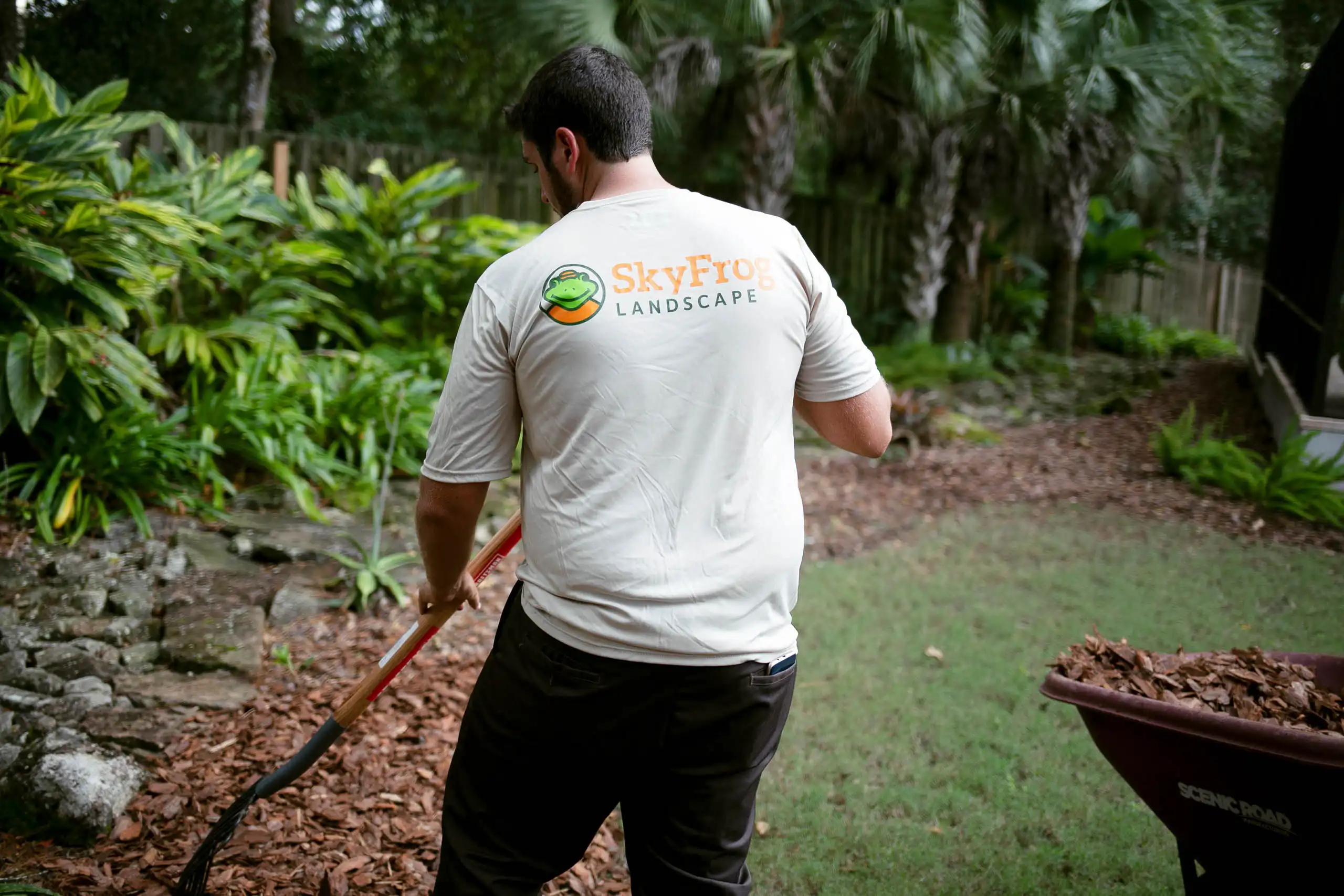
Calibrate your spreader before every application. A broadcast spreader at the wrong setting over-applies or under-applies; both are problems. Apply in two perpendicular passes at half rate to avoid the streaking that single-pass applications leave on St. Augustine.
Water in immediately after application. Dry granular fertilizer sitting on warm St. Augustine blades in Gainesville’s heat will cause fertilizer burn within hours. Watering in also moves product off the leaf and into the root zone where it can actually be used. Plan your application around your permitted irrigation window when to fertilize your lawn in Florida. This can be a genuine scheduling conflict to anticipate, especially during the summer months when the time window you’re allowed to run your sprinklers may not naturally align. For help coordinating your sprinkler system with your North Florida fertilizer schedule, see our irrigation system scheduling and repair services.
When a Professional Program Makes More Sense
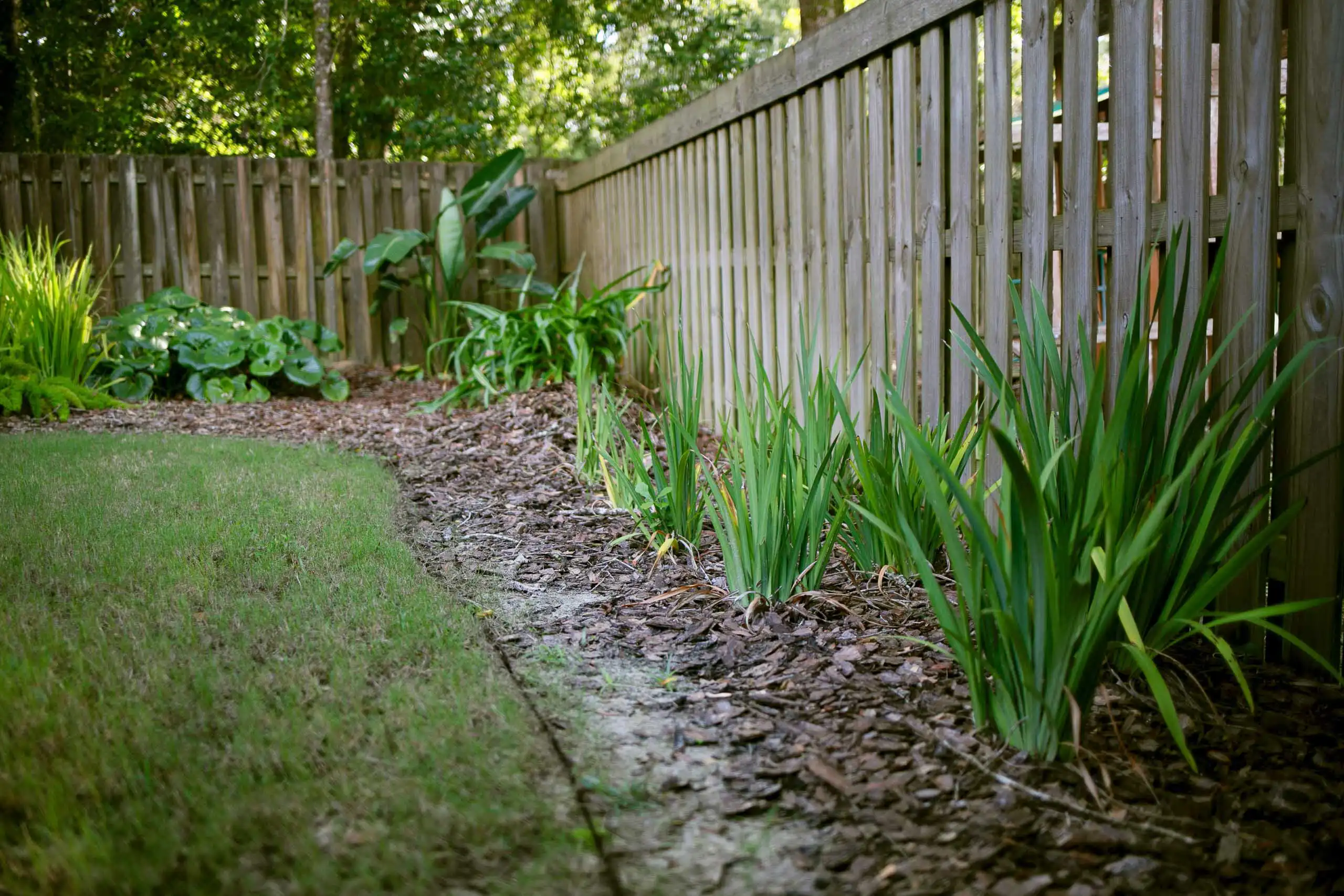
DIY fertilization works well for lawns when done consistently and on a well-managed schedule. It’s worth considering professional help when: a lawn has been under- or over-fertilized for multiple years and needs a recovery program; large or irregular properties make uniform coverage difficult; or the irrigation system isn’t properly calibrated – because fertilization and irrigation are interdependent, and applying fertilizer without the ability to water it in correctly undermines the entire program.
SkyFrog’s technicians are GI-BMP certified – a UF/IFAS credential that specifically covers Florida’s green industry best management practices, including the fertilizer schedule for St. Augustine grass in Florida and regulations that apply to every application.
SkyFrog’s GI-BMP certified team manages fertilization programs for St. Augustine lawns across Gainesville, Newberry, Alachua, and surrounding communities. If you’d rather hand the schedule over to people who do this every day, we’d be glad to help. Get in touch for a free lawn assessment.
Summary
Knowing when to fertilize a lawn in Florida is not straightforward, especially in North Florida, where cooler winters, sandy soils, and strict county regulations create a fertilization window that differs significantly from the rest of the state. This guide walks Gainesville homeowners through a month-by-month St. Augustine fertilization schedule, covering when to feed, when to hold off, what nutrients to use, and how to stay on the right side of Alachua County’s fertilizer ordinance and Florida’s Urban Turf Rule.
Posted in:
Tags: