

How to Fertilize St. Augustine Grass in North Florida: A Month-by-Month Schedule for Gainesville Lawns
North Florida follows its own fertilization calendar, one that national lawn guides ignore and generic “Florida” advice routinely gets wrong. If you’ve been searching for when to fertilize a lawn in Florida and landing on advice written for Orlando or Miami, that’s the problem: the schedule that works in the southern half of the state is the wrong one for Gainesville. This guide provides the timing, reasoning, and regulations that actually apply here. For a broader overview of year-round lawn maintenance, see our complete St. Augustine grass care guide for North Florida.
Why North Florida Fertilization Timing Is Different
Gainesville sits in a climatic band that Central and South Florida simply don’t share (the same reason why you don’t see the same kinds of palms up here either). Nighttime temperatures in Alachua County can be much cooler than the rest of the state; the city has seen record lows in the mid-teens Fahrenheit, and St. Augustine grass here can go through a genuine cool-season dormancy that lawns in Orlando or Miami may barely experience. That longer dormancy window pushes the spring start date later and the fall cutoff date earlier than what most Florida lawn care recommends.
North Florida Fertilization Regulations You Must Know Before You Start
Applying fertilizer in Gainesville without understanding Florida’s fertilizer laws isn’t just an environmental issue; it can result in fines.
Florida’s Urban Turf Rule restricts phosphorus applications statewide unless a soil test confirms a deficiency. This is a legal requirement, not a suggestion. Check current provisions for Florida Urban Turf Rules or Fertilizer Law Explanations.
In Alachua County, there is a fertilizer blackout period that runs from July through February. It’s best to check Alachua County’s current ordinance before each season, as rules can change.
Alachua County sits directly over the Floridan Aquifer. Nutrient runoff from residential lawns enters the stormwater system and drains toward Paynes Prairie and into the aquifer, a genuine environmental issue that makes correct timing matter beyond mere compliance. Getting your Florida-specific St. Augustine grass fertilizer schedule right is as much about being a responsible neighbor as it is about having a healthy lawn. These regulations might feel frustrating, but it is all in place to protect our local water and ecosystem. The SkyFrog team is a proud supporter of the Florida Friendly Landscaping movement, which treats every property as part of a larger system.
The Right St. Augustine Grass Fertilizer Schedule in Florida (Month by Month)
January–February
The fertilizer blackout runs until the end of February, but our advice would be the same if it didn’t. St. Augustine grass in Gainesville doesn’t need nitrogen as much during these months anyway because it is growing in these months the same way it would further South.
March–June: Slow-Release Nitrogen Application
The time to use a nitrogen-based fertilizer is after the fertilizer blackout ends. Regulations require that the fertilizer is a slow-release product, and must be phosphorus-free (unless you’ve tested the soil and it needs phosphorus).
May–June: Second Feeding and the Transition Into Wet Season
A second application in late May or early June, before the rainy season peaks, is appropriate for most Gainesville lawns. Verify Alachua County’s exact blackout start date before scheduling this application. Iron supplements (ferrous sulfate or chelated iron) can maintain turf color through the wet season without adding nitrogen during the blackout period; a practical, locally relevant option most homeowners don’t know about.
July–February: The Blackout Period
As of 2026, Alachua County still has the July-February fertilization blackout in effect, meaning no nitrogen or phosphorus applications are legally permitted during this period. Iron applications remain unrestricted and keep St. Augustine green without triggering the growth flush that invites pest pressure.
This doesn’t mean you can’t give your lawns any growth support during the blackout window. Our team uses nitrogen- and phosphorus-free biostimulants to support the microbes and healthy fungi that naturally live in soil. This makes the soil a healthy environment that supports turf growth.
What Type of Fertilizer Works Best for St. Augustine in North Florida?
Choosing the best fertilizer for St. Augustine grass in Florida means looking past the marketing and focusing on three things:
Slow-release nitrogen. Polymer-coated urea or IBDU releases nitrogen gradually, reducing leaching during rainfall.
Low or zero phosphorus is both legally sound and environmentally appropriate unless a soil test confirms a deficiency. The Florida Urban Turf Rule exists precisely because phosphorus runoff is a documented water quality problem in Florida’s sandy soils.
Iron is often overlooked, but it matters for Gainesville lawn fertilization. Iron deficiency causes the pale yellowing that many homeowners misread as nitrogen deficiency and attempt to fix with more nitrogen at the wrong time of year. A chelated iron product addresses this without the regulatory or ecological downsides.
Our team can help assess what deficiencies your lawn might have and apply the appropriate, compliant solution.
How to Apply Fertilizer Correctly in a Gainesville Lawn
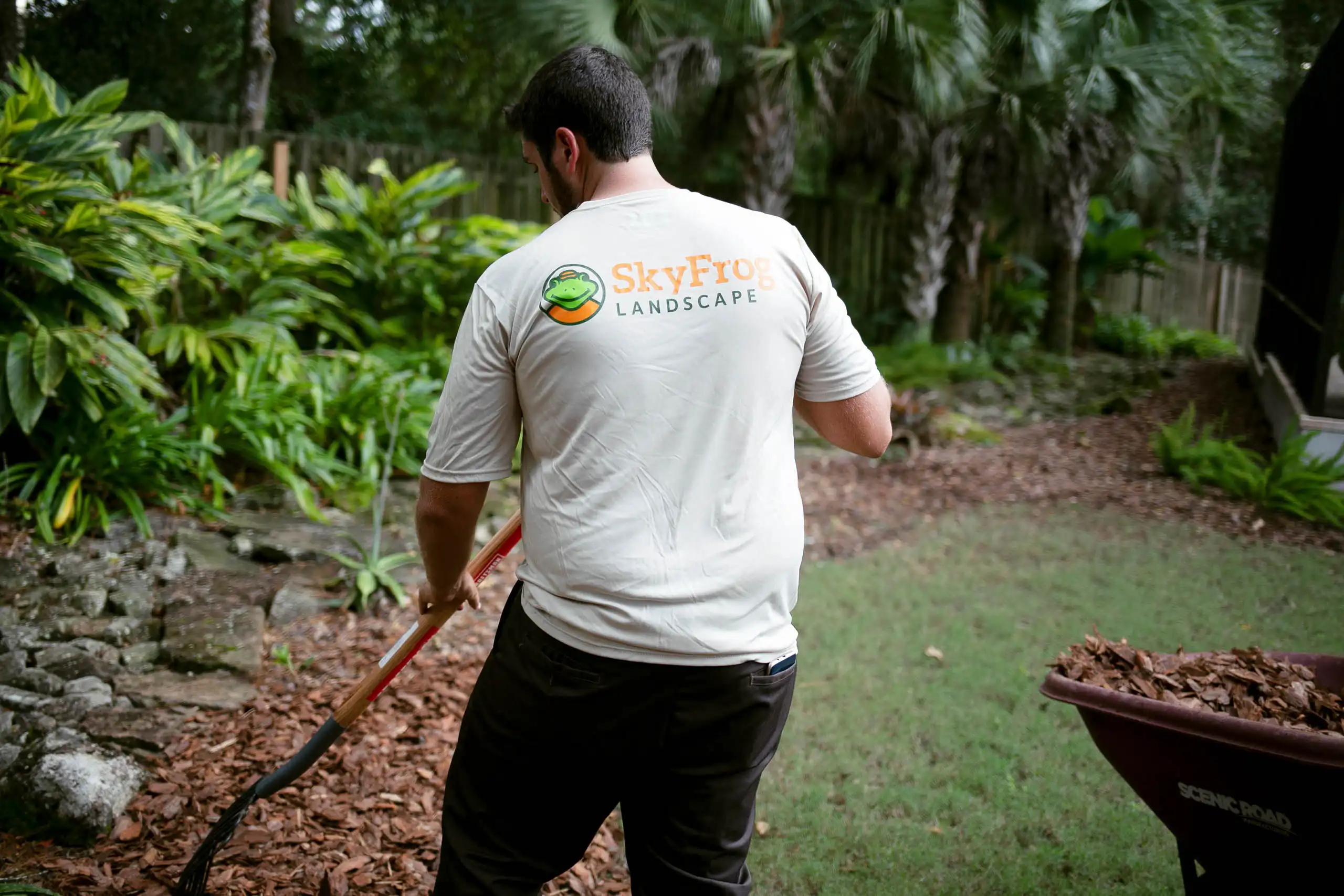
Calibrate your spreader before every application. A broadcast spreader at the wrong setting over-applies or under-applies; both are problems. Apply in two perpendicular passes at half rate to avoid the streaking that single-pass applications leave on St. Augustine.
Water in immediately after application. Dry granular fertilizer sitting on warm St. Augustine blades in Gainesville’s heat will cause fertilizer burn within hours. Watering in also moves product off the leaf and into the root zone where it can actually be used. This is another reason why it’s recommended to fertilizer early in the fertilizer window: summer irrigation restrictions are not currently in place.
Our leadership team is FNLGA-certified and we pass on that expertise to all our crews. Getting fertilization right is one of the toughest jobs homeowners face, especially with local restrictions in place. Explore our maintenance services to see what our team can do to take lawn care off your hands.
When a Professional Program Makes More Sense
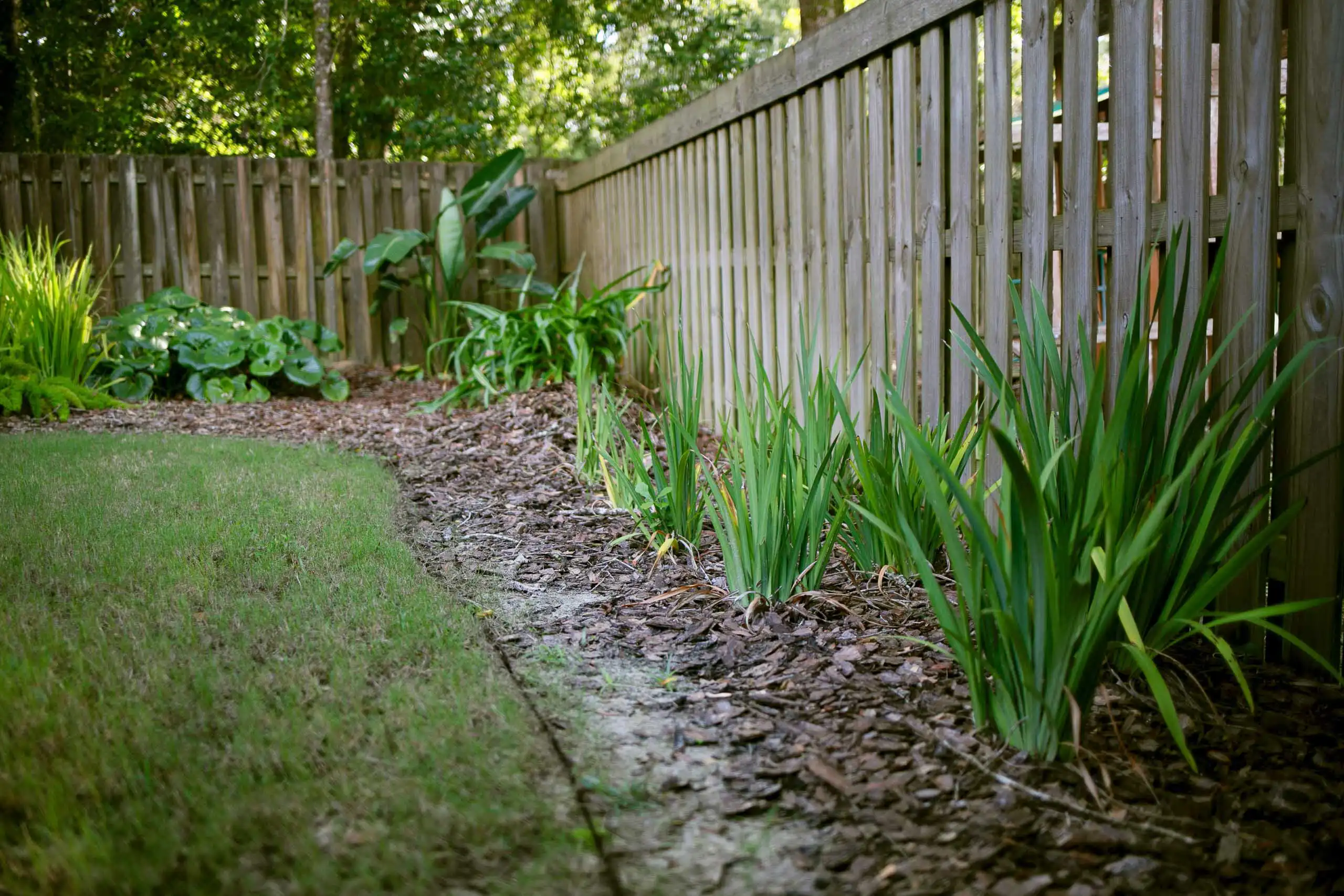
DIY fertilization works well for lawns when done consistently and on a well-managed schedule. It’s worth considering professional help when: a lawn has been under- or over-fertilized for multiple years and needs a recovery program; large or irregular properties make uniform coverage difficult; or the irrigation system isn’t properly calibrated – because fertilization and irrigation are interdependent, and applying fertilizer without the ability to water it in correctly undermines the entire program.
SkyFrog’s technicians are GI-BMP certified – a UF/IFAS credential that specifically covers Florida’s green industry best management practices, including the fertilizer schedule for St. Augustine grass in Florida and regulations that apply to every application.
SkyFrog’s GI-BMP certified team manages fertilization programs for St. Augustine lawns across Gainesville, Newberry, Alachua, and surrounding communities. If you’d rather hand the schedule over to people who do this every day, we’d be glad to help. Get in touch for a free lawn assessment.
Summary
Knowing when to fertilize a lawn in Florida is not straightforward, especially in North Florida, where cooler winters, sandy soils, and strict county regulations create a fertilization window that differs significantly from the rest of the state. This guide walks Gainesville homeowners through a month-by-month St. Augustine fertilization schedule, covering when to feed, when to hold off, what nutrients to use, and how to stay on the right side of Alachua County’s fertilizer ordinance and Florida’s Urban Turf Rule.
Tags: