

9 St. Augustine Grass Mistakes Gainesville Homeowners Make (And How to Avoid Them)
St. Augustine grass care in Florida is the most common turf for Gainesville homeowners, but this grass demands more precision than most people expect. Unlike the generic turf advice that circulates online, most of it written for Central Florida or the Gulf Coast, Florida-based St. Augustine grass care responds to a specific set of North Florida conditions that are easy to get wrong.
Our team works on many St. Augustine lawns across Alachua County year-round, and the same ten mistakes come up again and again. This post is not about landscaping broadly (we’ve covered that elsewhere); it’s specifically about the turf management decisions that determine whether your St. Augustine stays dense, green, and weed-free. For a full reference on caring for this grass type in our region, start with our full St. Augustine grass care guide for North Florida. The UF/IFAS St. Augustine grass publication is also worth bookmarking.
Here are the ten mistakes we see most often, starting with the ones that cause the most visible damage.
Mistake 1 — Mowing Too Short (Scalping)
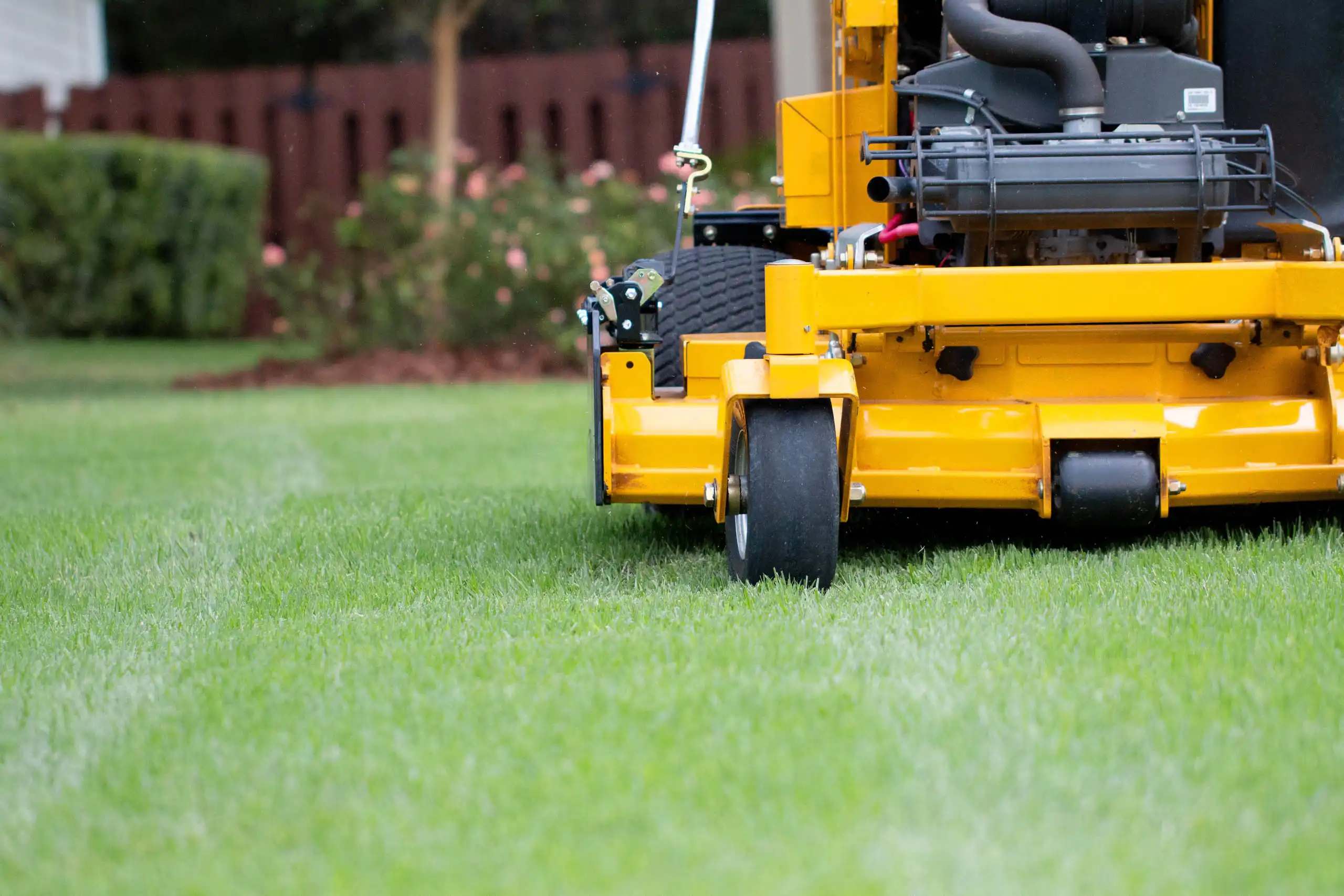
This is the single most common mistake we encounter in Gainesville yards, and the damage it causes is immediate. St. Augustine grass should be mowed at 3.5 to 4 inches in North Florida – significantly higher than most homeowners expect, and much higher than the 1.5–2 inches typical for Bermuda. When you cut below 3 inches, you’re removing the majority of the leaf blade’s photosynthetic surface. The plant can no longer generate the energy it needs to sustain its root system, and it shifts resources into emergency leaf production rather than root development.
Summer heat means a scalped lawn can show signs of heat stress within 2 or 3 days. On top of that, exposed soil is an open invitation for weed germination – dollar weed in Florida and crabgrass thrive in the gaps left by a thinning turf canopy. If your lawn looks patchy or yellowed and you’ve been cutting it short because it “looks neater,” raise the mowing deck before trying anything else. Most rotary mowers have a simple height adjustment at each wheel; set it once and leave it. A slightly taller lawn that’s healthy will look far better than a short lawn that’s struggling.
Mistake 2 — Over or Under-Watering
This isn’t so much a mistake as one of the main struggles homeowners face with St. Augustine: it needs more moisture than other turf varieties. Irrigation bans through the summer mean that lawns receive irregular amounts of water, while irrigation restrictions through winter mean that St. Augustine turf struggles to get the consistent moisture it needs to thrive.
For this reason, our team of FNGLA-certified plant experts recommend turf alternatives such as Cobalt or Zoysia. Both of these varieties are far more drought-resistant than St. Augustine. We also point homeowners in the direction of groundcover alternatives, such as Perennial Peanut, Powder Puff Mimosa, and Asiatic Jasmine. All three make for a great-looking lawn with minimal maintenance.
Mistake 3 — Fertilizing at the Wrong Time
There are fertilizer restrictions in place across Gainesville and Alachua County. These restrictions help to prevent damaging runoff into our local water systems. But homeowners who ignore these restrictions are also damaging their St. Augustine turf. While you can apply fertilizer to your yard from February through July, we recommend applying it only in March or early April to support deep root development.
Early nitrogen leaches through Gainesville’s sandy soils before the grass can use it, or feeds weed germination. Late-season nitrogen is worse – it pushes soft new growth into cooler temperatures, raising the risk of frost dieback and fungal disease.
If you’re using fertilizer, stick to slow-release nitrogen. Anything containing phosphorus is not allowed as per local regulations. At SkyFrog, we often use biostimulants as an alternative to nitrogen fertilizer. These products target the soil microbes, given roots a naturally better environment to grow while improving overall soil quality.
At SkyFrog, we ensure your lawncare never falls foul of local restrictions, whatever turf you have.
Mistake 4 — Ignoring Pre-Emergent Herbicide Windows
Weed prevention in St. Augustine is almost entirely a timing problem. Weeds in St. Augustine grass in Florida don’t respond to reactive treatment the way established plants do. Pre-emergent herbicides prevent weed seeds from germinating before they take hold. Miss the window, and you spend the entire growing season fighting weeds that are already established, which is slower, more expensive, and harder on your grass.
For summer annual weeds, the relevant window is roughly late February through early March. For winter annuals (chickweed, Poa annua, henbit), the window is September through October, as soils begin to cool. Miss either window, and you’re stuck doing reactive weed control all season. St. Augustine is more sensitive to herbicides than other turf varietals, so it’s best to avoid continuous weed management where possible (we’ll cover this more in Mistake 6).
The best St. Augustine weed control comes back to Mistake 1: Don’t cut your lawn too short. The taller the grass blades, the more shade there is to limit weed growth.
Mistake 5 — Misidentifying Chinch Bug Damage as Drought Stress
This is arguably the most costly diagnostic mistake in Gainesville lawns. Chinch bugs in Florida, specifically the Southern chinch bug, create irregular dead patches in St. Augustine that look, to most homeowners, exactly like drought stress. The instinctive response is to water more. That makes things significantly worse. Lush, soft, well-watered St. Augustine is precisely what chinch bugs prefer, and additional irrigation accelerates the spread of damage.
Chinch bug damage starts at lawn edges near pavement and spreads outward; drought stress is more uniform. To confirm, press a bottomless coffee can into the damaged area, fill it with soapy water, and watch for small black-and-white insects floating up within a few minutes.
Mistake 6 — Using the Wrong Herbicide in St. Augustine
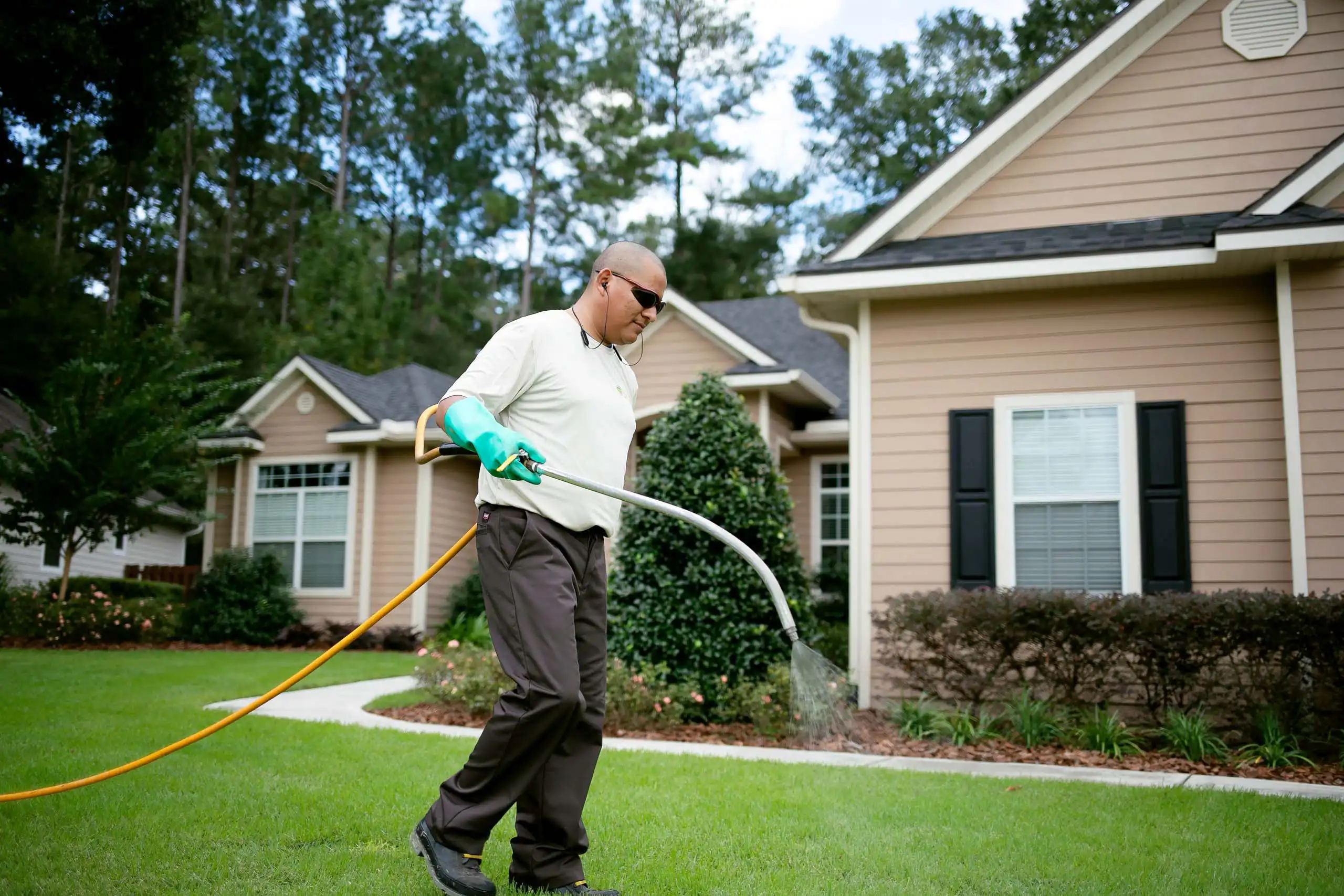
St. Augustine is herbicide-sensitive in ways that Cobalt and Zoysia are not. Products that are safe and effective in those grasses can cause serious injury – or complete loss – in St. Augustine, and the label language is not always clear enough to catch this before damage is done.
Atrazine works but has rate limits homeowners often miss. A bigger issue is broadleaf killers with 2,4-D – concentrations safe for other turf varieties can cause bleaching and runner dieback in St. Augustine. St. Augustine grass weeds in Florida require label-checking for grass-type compatibility, not just the weed. This is one area where professional application genuinely reduces risk.
SkyFrog Landscape’s lawn care team handles fertilization, weed control, and pest management for St. Augustine lawns across Gainesville and surrounding communities. If your lawn is showing any of the signs above, get in touch through our lawn care services; we’ll assess the problem and tell you exactly what it needs.
Mistake 7 — Letting Thatch Build Up
St. Augustine produces thatch – the layer of partially decomposed stems and organic matter between the green leaf canopy and the soil surface – more aggressively than most other warm-season grasses. In moderate amounts, thatch is normal and harmless. When it exceeds about half an inch, it starts creating problems that cascade through the lawn’s health.
Thick thatch blocks water, fertilizer, and soil amendments from reaching the root zone – and creates the warm, moist conditions that fungal diseases and chinch bugs prefer. To check depth, press a screwdriver through the canopy; more than half an inch of spongy brown material means it’s time to act. In Gainesville’s sandy soils, light verticutting in early spring is usually all that’s needed.
Mistake 8 — Poor Drainage
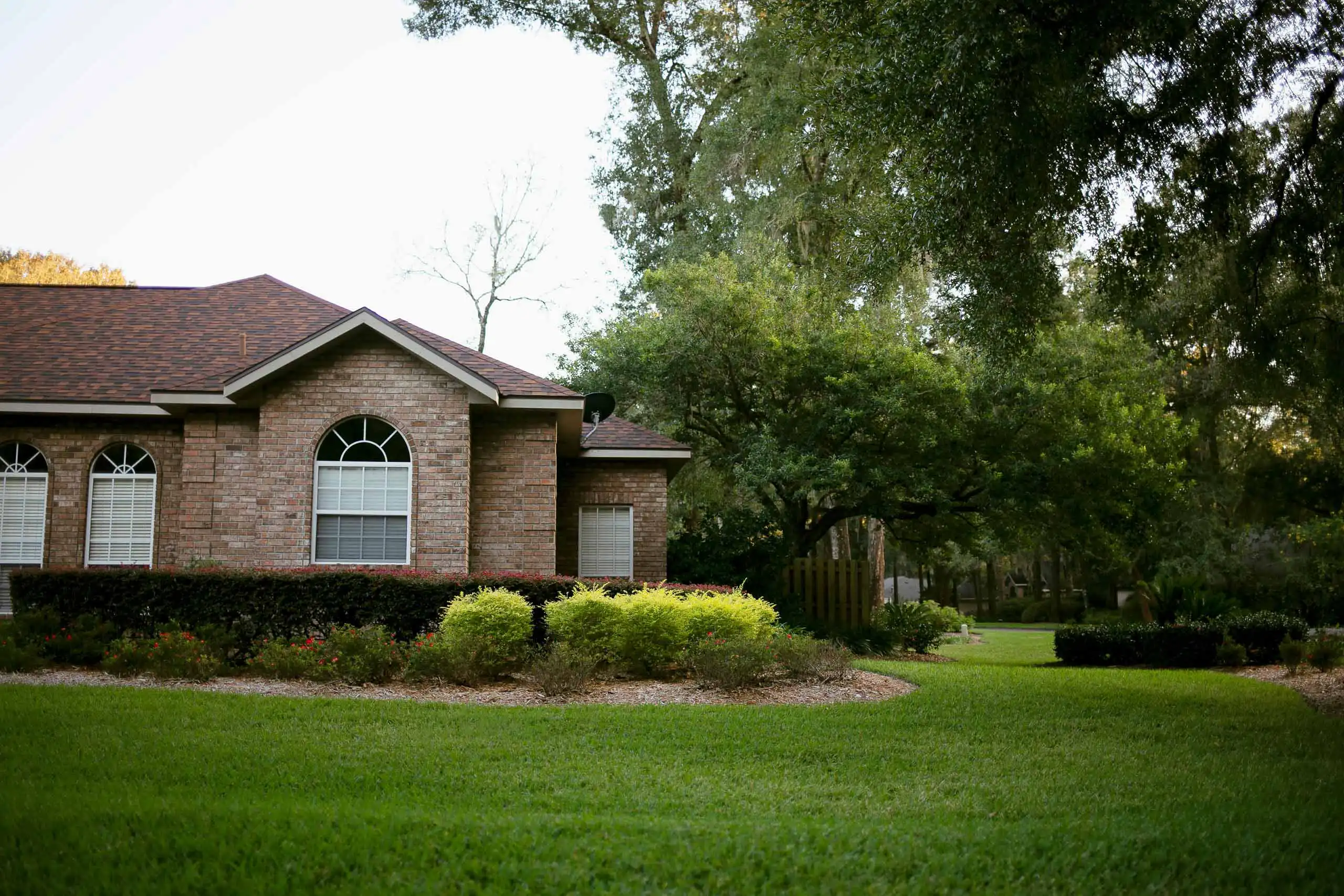
Gainesville’s wet season runs from June through September, with monthly rainfall averaging six to eight inches.
Fungal diseases thrive in the consistently wet canopy, nutrients leach through sandy soil before the grass can use them, and roots stay shallow because they never need to search for moisture – leaving the lawn vulnerable when the wet season ends.
It’s important to see drainage as a crucial part of your annual landscaping maintenance. Drainage affects the whole property, from your lawn to your basement foundation. During hurricane season, your property’s drainage will play a big role in reducing the chance of flooding.
Our teams views drainage through a whole-property lens. We are here to help, from inspecting your downspouts to maintaining and upgrading your irrigation system and grading your property to direct water safely away, all while following local regulations. Explore our irrigation and drainage services to learn more.
Mistake 9 — Treating St. Augustine Like Other Turf
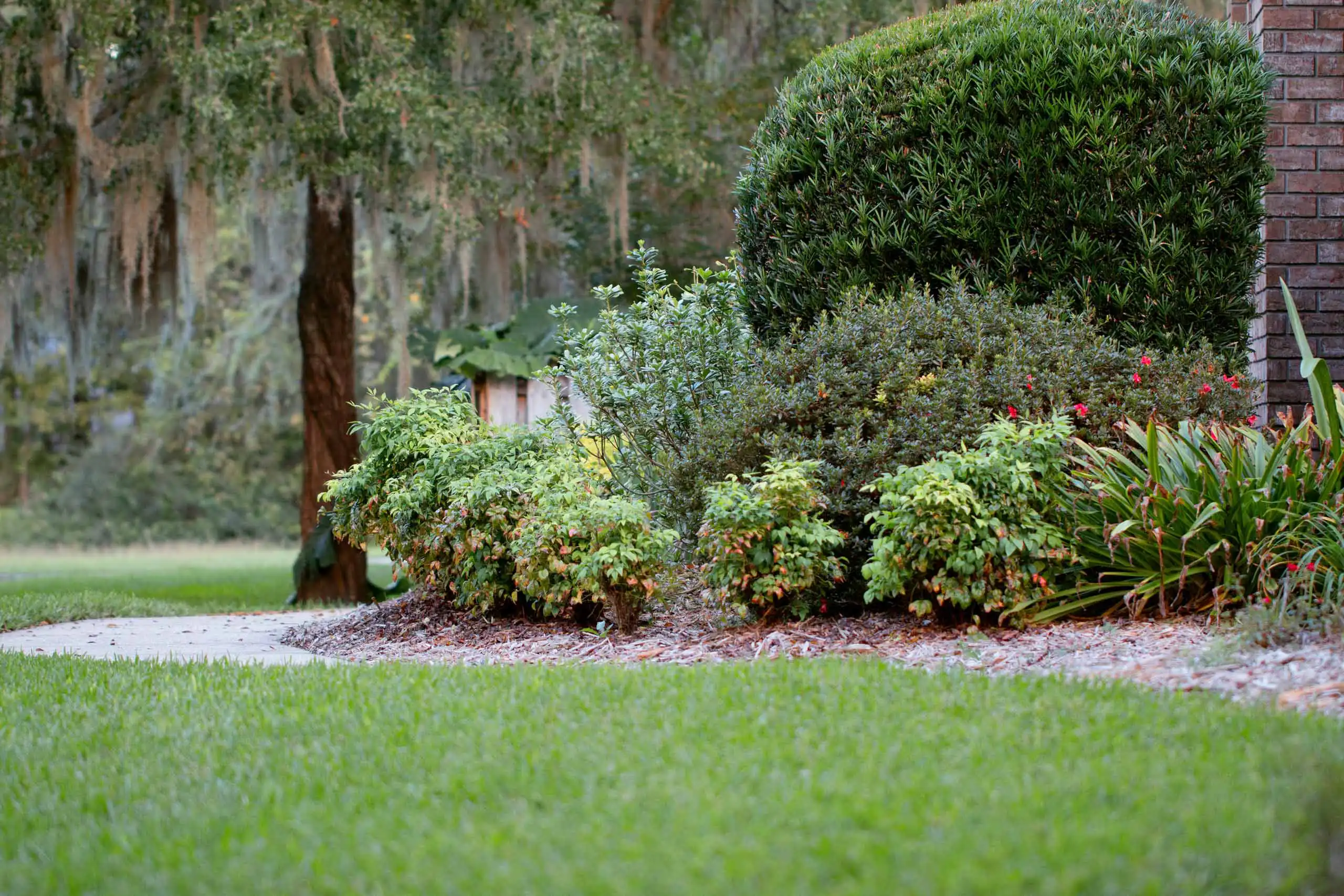
The main mistake behind many of the items on this list is applying generic lawn advice to a grass that is more sensitive than other turf varieties. St. Augustine is different from Bermuda or Zoysia in nearly every dimension that matters for day-to-day maintenance: mowing height, shade tolerance, fertilization timing, herbicide sensitivity, disease susceptibility, and thatch production rate all diverge significantly. Advice written for other turf will produce poor results in St. Augustine and can cause active damage.
This matters because North Florida sits at the edge of St. Augustine‘s ideal climate range. The grass can handle our winters, but it doesn’t have the margin for error it might have in Tampa or Orlando. Management choices that would be recoverable in South Florida can cause seasonal setbacks here. SkyFrog Landscape’s team maintains St. Augustine lawns across Gainesville lawn care territory – Gainesville, Alachua, Newberry, and the surrounding communities – and the recommendations throughout this article come from that fieldwork, not from generic turf publications written for a different part of the state.
Where To Find Reliable Lawncare in Gainesville

SkyFrog Landscape’s lawn care team handles fertilization, weed control, and pest management for St. Augustine lawns across Gainesville and surrounding communities. If your lawn is showing any of the signs above, get in touch. We’ll assess the problem and tell you exactly what it needs, or suggest lawn alternatives that could be more successful on your property, meaning less work and more enjoyment for you and your family.
Summary
St. Augustine grass care in Florida comes with specific demands that most Gainesville homeowners underestimate. From mowing too short and missing fertilization windows to misidentifying chinch bug damage and using the wrong herbicides, small mistakes add up to serious lawn decline. North Florida’s sandy soils, seasonal rainfall patterns, and temperature swings make timing and product selection especially critical for St. Augustine. Getting these fundamentals right is the difference between a lawn that stays dense and green year-round and one that constantly needs rescuing.
Tags: