
St. Augustine grass traditionally covers more Gainesville lawns than any other turfgrass, and for good reason. It handles North Florida’s heat and humidity, tolerates the shade of live oaks and laurel oaks lining neighborhoods from Haile Plantation to Duckpond, and manages the wet-dry swings that define Alachua County’s climate calendar. No other warm-season turfgrass handles that combination as reliably here.
But caring for it here is more demanding than most homeowners realize. Alachua County’s sandy and sandy loam soils drain differently from the clay-heavy soils common elsewhere in the Southeast. North Florida’s wet season runs from June through September, then largely disappears, leaving lawns dependent on irrigation from November through May (and restrictions apply, which we’ll discuss later). Pest and disease pressure does not reset the way it does in colder climates – winters here are mild enough for populations to carry over. These details change the calculus on almost every care decision.
This guide covers Florida-specific St. Augustine grass care for North Florida properties: what the grass needs, when it needs it, and what to watch for in Gainesville’s conditions. If you’ve been searching for Florida landscape ideas built around a durable, heat-tolerant turfgrass, St. Augustine is almost always the right starting point – provided you understand what it actually needs here.
Why St. Augustine Grass Dominates North Florida Lawns
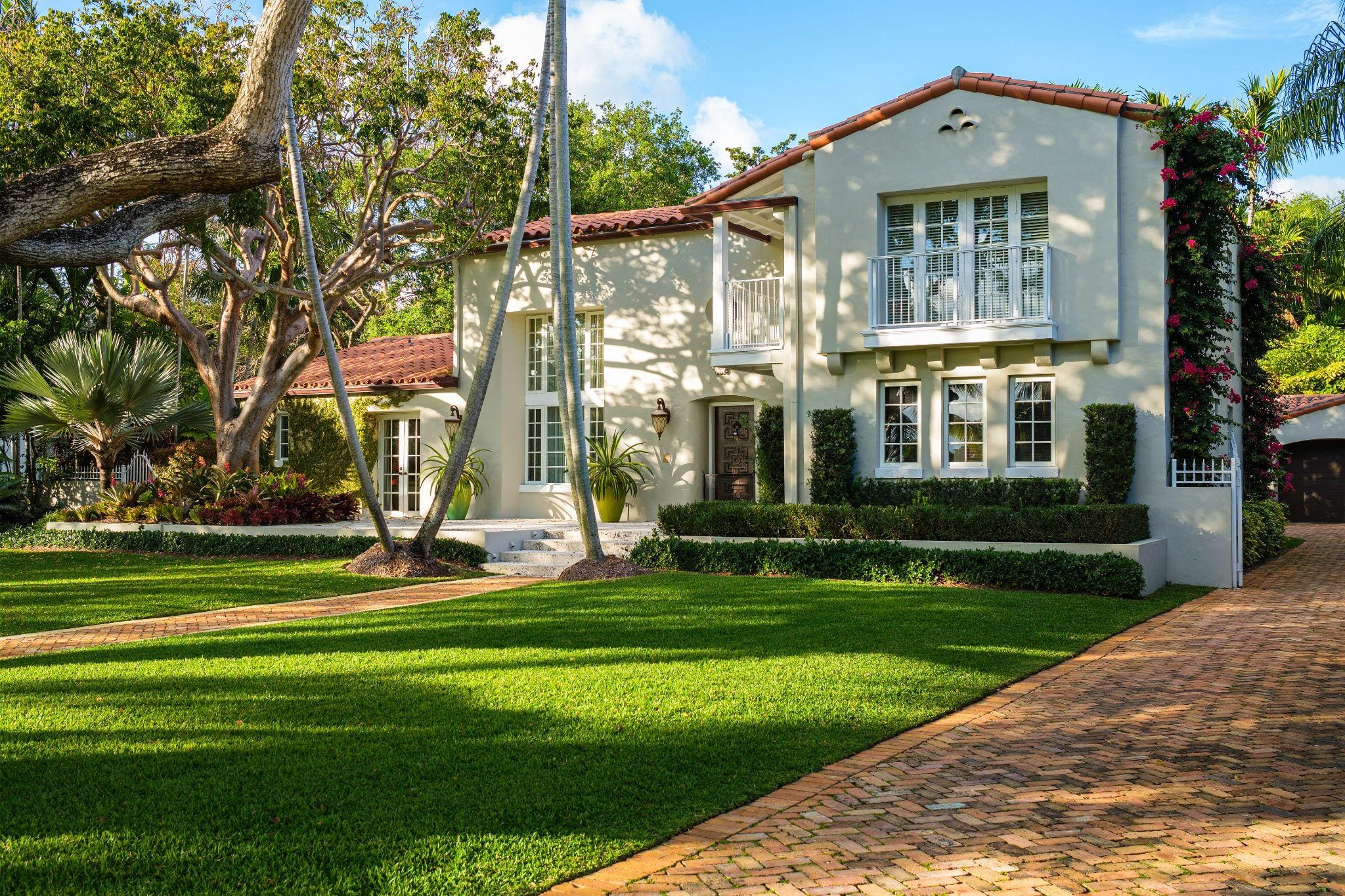
When homeowners and landscape professionals talk about St. Augustine here, performance and shade tolerance are always part of the conversation. Gainesville’s residential tree canopy – mature live oaks, laurel oaks, and water oaks shading lots in neighborhoods like Haile Plantation and Duckpond – makes full-sun turf grasses impractical in many yards. St. Augustine fills those shaded spaces reliably, provided the shade is not total.
The climate fit is the other reason. Gainesville sits in a humid subtropical zone: summers push into the low-to-mid 90s, annual rainfall averages about 51 inches concentrated in a four-month wet season, and hard winter freezes are outliers rather than annual events. St. Augustine evolved for exactly these conditions.
Alachua County’s predominant soil types – sandy loam and fine sand – are well-draining, low in organic matter, and prone to drying out quickly between rain events. St. Augustine’s deep root system handles these conditions better than finer-bladed grasses that struggle in coarser soils.
Floratam vs. Palmetto vs. CitraBlue vs. Cobalt: Which Variety Is Right for Your Gainesville Yard?
Most Gainesville lawns installed in the last twenty years are Floratam – vigorous, quick to establish, and reliable in full-sun conditions. If your yard gets six or more hours of direct sun, Floratam is the default choice.
Palmetto is the better call for shaded yards. It handles low-light conditions considerably better than Floratam, making it the right fit for lots with significant tree cover. The tradeoff is slightly higher susceptibility to chinch bugs, so monitoring matters more.
CitraBlue was developed by UF/IFAS researchers specifically for Florida conditions. However, at Skyfrog Landscape, we recommend using Cobalt as a superior newer varietal. It shows improved chinch bug resistance, tolerates moderate shade, and maintains a finer texture than the older varieties. Overall, Cobalt is our top St. Augustine recommendation for Northern Florida lawns.
If you find yourself constantly struggling with your lawn, there are also alternatives to St. Augustine turf. For example, Zoysia grass is drought-resistant and durable, making it a great alternative for Northern Florida conditions. Homeowners can also consider groundcover alternatives such as Perennial Peanut, Powder Puff Mimosa, and Asiatic Jasmine, all of which are drought-tolerant and perform well in shaded lawns with minimal maintenance.
The North Florida Lawn Calendar: Month-by-Month St. Augustine Care
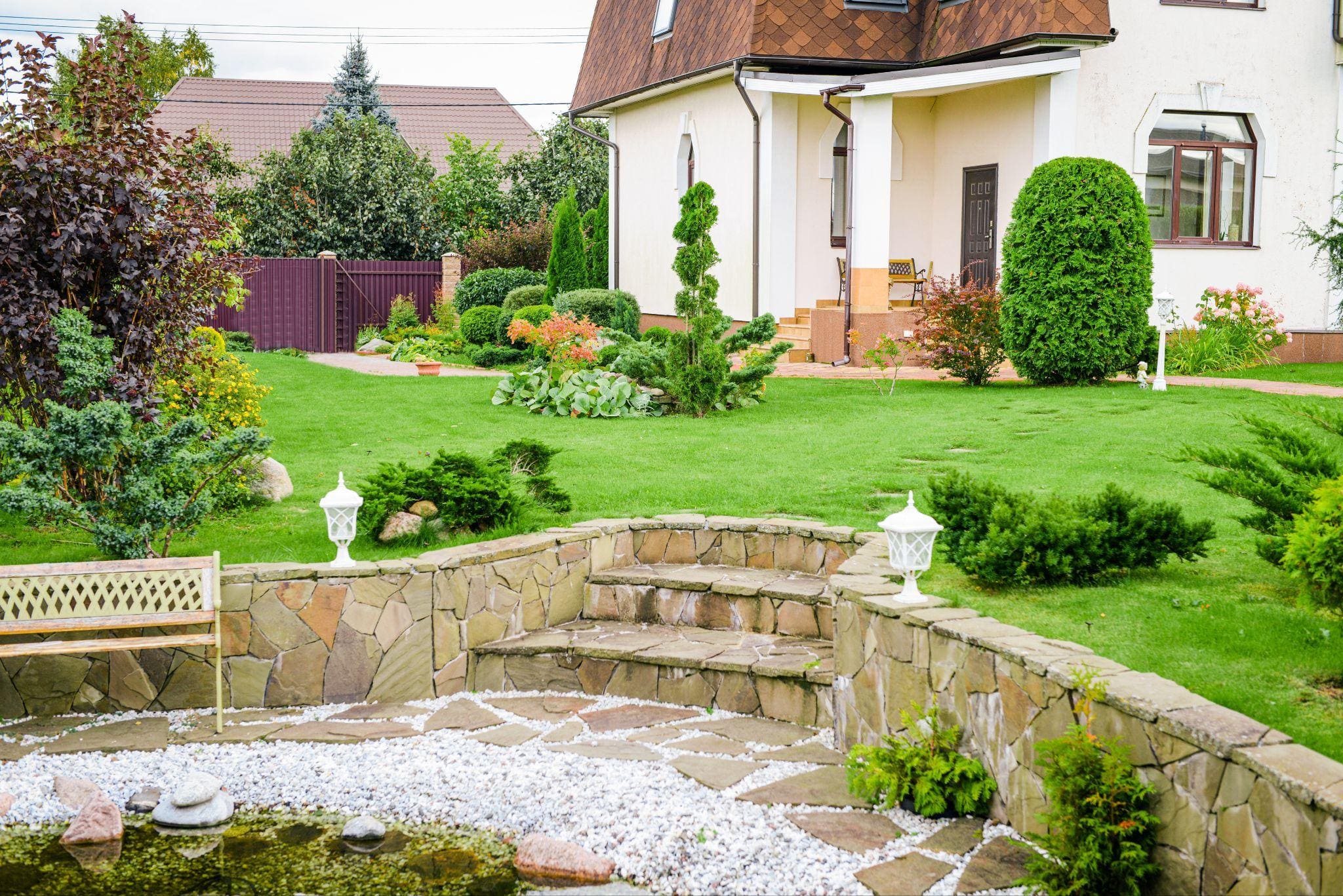
National lawn care calendars are calibrated for broad regional averages that have little to do with Gainesville’s actual climate rhythm. What follows is the North Florida lawn care schedule as it plays out on a real St. Augustine lawn in Alachua County.
January – February: Dormancy and Transition
St. Augustine in North Florida rarely goes fully dormant – winters here don’t deliver the sustained cold that triggers true dormancy. Expect slow growth, some discoloration in outlier cold snaps, and minimal shoot development. The lawn is waiting, not dead.
Mowing: Raise height to 4 inches and mow only when growth occurs – most January weeks won’t require it.
Fertilization: Do not fertilize. Nitrogen applied to a non-growing lawn contributes to runoff and does nothing for the turf. Alachua County’s proximity to the Santa Fe and Suwannee River systems makes fertilizer timing an environmental concern, not just a lawn health one.
Pre-emergent herbicides: Late January into early February is the critical window for pre-emergent applications targeting summer annual weeds.
Irrigation: Run your system only as needed. Both the Suwannee River Water Management District and St. Johns River Water Management District maintain year-round irrigation restrictions. You can verify permitted watering days and hours at Suwannee River Water Management District irrigation restrictions.
March – April: Green-Up and Early Season
As day length increases and temperatures climb back into the 70s and low 80s, St. Augustine begins actively growing again. Sandy Alachua County soils warm quickly, so the green-up timeline here often runs 2–3 weeks ahead of what you’d expect further north.
Mowing: Resume regular mowing. Keep height at 3.5 to 4 inches – never remove more than one-third of the blade height in a single mow.
Fertilization: March or early April marks the appropriate timing for the first fertilizer application of the year. Use a nitrogen-based fertilizer; confirm local requirements before purchasing any program.
Pre-emergent (summer weeds): If you haven’t applied a pre-emergent in late February, March is your last window before summer weeds begin to germinate. Once germination begins, pre-emergent treatment is ineffective.
Irrigation: April is typically one of Gainesville’s driest months. This is a good time to have your irrigation system checked by a professional.
May: Pre-Summer Transition
May is transitional — temperatures are climbing rapidly, St. Augustine enters its peak growth phase, and chinch bug pressure begins to build.
Mowing: Most active lawns in May require mowing every 7–10 days.
Fertilization: A second nitrogen application is appropriate in May if you haven’t fertilized since March. Iron supplementation is worth considering for lawns showing pale or yellowish coloration — iron deficiency is common in Gainesville’s alkaline sandy soils.
Pest scouting: Check lawn edges near driveways and other hard surfaces for early chinch bug activity – irregular yellow or dead patches at the hottest, driest parts of the lawn. The DIY test: press a coffee can (both ends removed) into the turf near a suspicious area, fill with water, and watch for chinch bugs floating to the surface.
June – September: Wet Season and Peak Pressure
See the dedicated Wet Season section below.
October – November: Cool-Season Transition
The wet season ends abruptly, usually in late September or early October. Temperatures moderate, growth slows, and the lawn shifts into recovery mode after summer stress.
Mowing: Reduce frequency as growth slows. Keep height at 3.5–4 inches heading into winter.
Fertilization: October is your last window for a nitrogen application. Do not fertilize after October in North Florida – late-season nitrogen promotes soft, vulnerable growth just as temperatures drop, increasing disease susceptibility.
Pre-emergent (winter weeds): September into early October is the window for pre-emergents targeting winter annual weeds – chickweed, Poa annua, and henbit are the primary offenders in Alachua County lawns.
Irrigation: Rainfall drops sharply in October. Resume supplemental irrigation, staying within your permitted watering schedule.
December: End-of-Year Assessment
December is a good month to walk your lawn with fresh eyes. Document thin patches, persistent disease spots, or sections that never fully recovered from summer stress — these will need targeted attention in spring. Resist the urge to apply fertilizer until after the blackout periods ends at the end February.
Managing Dry and Wet Season in Gainesville
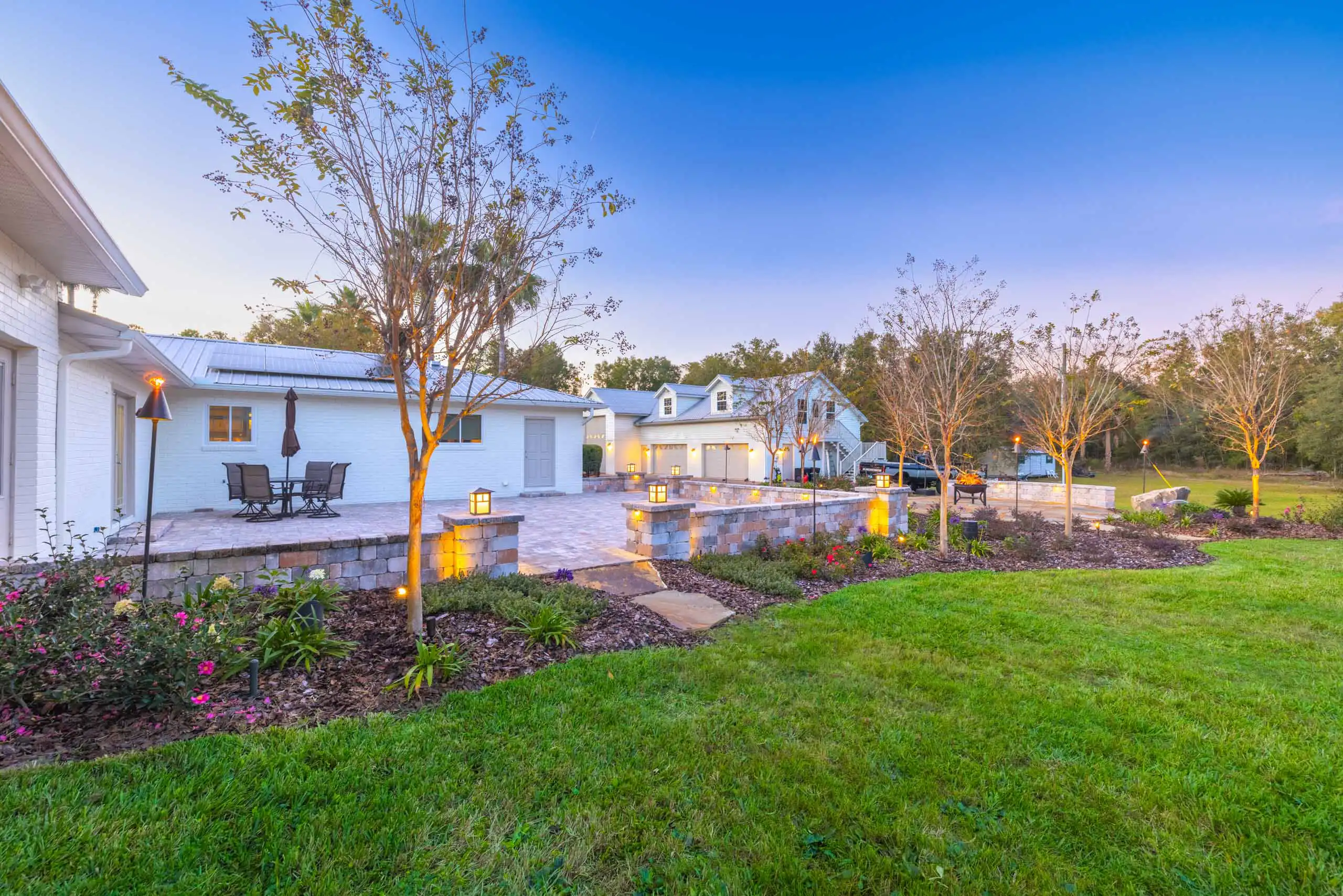
Dry Season Lawn Care in Gainesville (November–May)
Gainesville’s dry season runs from roughly November through May – seven months when most St. Augustine lawns quietly deteriorate not from pests or disease, but from inadequate irrigation management. Sandy soils hold very little water, and what moisture they do hold drains quickly, especially during warm spring months when temperatures are climbing but the wet season hasn’t arrived.
Raise your mowing height during dry periods. A mowing height of 4 inches is protective – taller blades shade the soil and reduce evapotranspiration.
Watch for signs of wilting before the grass browns. Blade folding (blades curl lengthwise into a grey-blue cast) and footprinting are your cues to irrigate early.
Wet Season Lawn Care in Gainesville (June–September)
Gainesville’s wet season brings daily afternoon thunderstorms, high humidity, and temperatures that rarely drop below 80°F overnight – both peak growth season and peak pressure season for St. Augustine grass.
The main thing here is to make sure that your lawn isn’t overwatered. In Florida, if you have an automated irrigation system, it must be equipped with rain sensors that shut off when soil moisture is high enough. However, irrigation systems do require regular maintenance to make sure sensors are working and that there aren’t any wasteful leaks. Even if you have a rain sensor, it’s best to have it checked by a professional. SkyFrog Landscape’s irrigation team can assess your system and recommend fixes or upgrades where needed, including adding modern smart rain sensors.
In general, overwatering in summer drives take-all root rot and grey leaf spot growth, two of North Florida’s most damaging St. Augustine diseases.
Another issue to watch for in summer is pests such as chinch bugs. Chinch bug activity peaks from June through August. Hot, dry microenvironments at lawn edges near driveways and fences create ideal conditions even within the wet season. Scout stressed-looking patches before treating for anything else.
It’s also important to mow regularly. Expect to mow every five to seven days. Falling behind allows heat and humidity to build at the soil surface, promoting fungal conditions.
Watering St. Augustine Grass in North Florida: Getting It Right
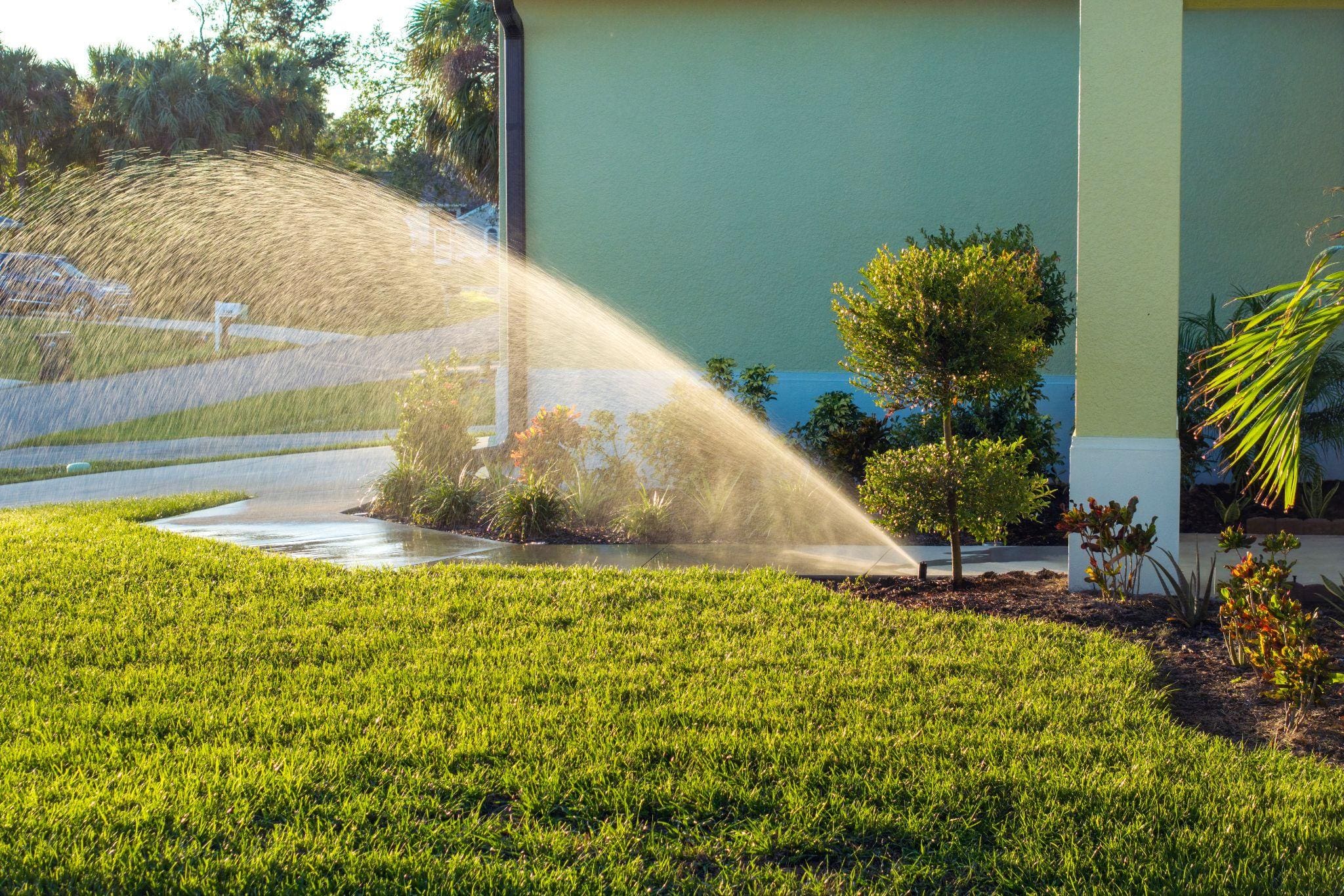
The best time to water St. Augustine here is between 4 and 8 a.m. when the wind is calm, temperatures are lower, and the turf has time to dry before nightfall. Evening watering leaves the canopy wet overnight, creating ideal conditions for fungal disease.
Because that sandy soil drains fast, more frequent, shorter irrigation cycles often serve Alachua County lawns better than less frequent, deeper cycles.
The tuna can calibration test: place several empty tuna cans at different points within each irrigation zone, run the zone, and measure the water depth in each can. Uneven results point to coverage gaps or pressure problems. Only 3/4 of an inch can be applied during irrigation according to local regulations so it’s important to test that your irrigation system is only watering what’s allowed.
Extreme Water Shortage Restrictions
As of summer 2026, Northern Florida communities are under strict extreme water shortage restrictions. These restrictions impact lawn care in the following ways:
- Irrigation systems should be turned off and used only when needed
- No irrigation between 8am and 6pm
- Irrigation can only be used 1 day a week (odd house numbers on Saturday, even house numbers on Sunday, non-residential on Tuesday)
- Establishment irrigation is limited to the 15/30/15 rule and the minimum amount water needed: Initial 15 days – any day; Next 30 days – up to 3 days/week; Next 15 days – up to 2 days/week
Read more on the Alachua County County Codes and Compliance page.
For homeowners with aging irrigation systems or coverage gaps, irrigation system maintenance and repair is often the most cost-effective investment in lawn quality. The Skyfrog Landscape team is proud to be a recognized Water Star Accredited Irrigation Professional in Alachua County. Reach out to our team for your annual irrigation maintenance checks.
A note from our team: With drought and water restrictions becoming a regular problem in our community, we recommend exploring lawn alternatives to St. Augustine turf that don’t require as much irrigation. Contact our team to discuss your options.
Fertilizing St. Augustine Grass in North Florida
Knowing when to fertilize your lawn is one of the questions Gainesville homeowners ask most often, and the answer differs from what national guides suggest. However, it’s important to know that Nitrogen fertilizers cannot be used in Alachua County between July through February, and phosphorus-containing products are banned altogether unless the soil is critically low in phosphorus. However, there are fertilizer-free alternatives that allow homeowners to feed their lawns during the fertilizer blackout period that we’ll discuss later.
A proper Northern Florida St. Augustine grass fertilizer schedule follows the growing season: begin applications typically between late March to early April, with follow-up applications where needed up until the beginning of the blackout period in July.
Nitrogen is the primary nutrient St. Augustine needs. The problem is, Nitrogen may only be applied from March through June. A general annual target for established Alachua County lawns is 4–6 pounds of actual nitrogen per 1,000 square feet, divided across 3–4 applications across the March – June window. Fertilizers must contain at least 50% slow-release Nitrogen, which isn’t a problem because slow-release products perform better anyway.
If you are looking to apply fertilizer to your lawn, make sure you read the Alachua County Codes and Compliance page. These regulations are vital to help protect our waterways and drinking water for us and future generations.
Nitrogen & Phosphorus-Free Fertilizer Alternatives
Just because you can’t use nitrogen or phosphorus throughout the year doesn’t mean you can’t grow a healthy lawn. Iron supplementation corrects the pale or yellow-green coloration common in Alachua County’s high-pH sandy soils, where iron is physically present but chemically unavailable to the grass. Foliar iron applications fix this quickly without adding nitrogen load. Biostimulants are a great alternative to fertilizer that our team uses. Biostimulants work by improving the microbial activity that supports healthy soil. This benefits plants without adding any fertilizer to the soil.
Alachua County is encouraging residents to join the “Fertilizer Free” movement. 68% of Alachua County residents have already gone fertilizer free. You can show your support for the fertilizer-free movement by filling in this form.
Our team can make sure your lawn receives fertilizer according to Alachua County regulations. Our lawn-care experts have received the “Florida Friendly Best Management Practices for Protection of Water Resources by the Green Industries” training certificate from the Florida-Friendly Landscaping Program, and we use nitrogen and phosphorus-free products to help your lawn get the nutrients it needs during the fertilizer blackout period. Explore our lawn care services to learn more.
Weed Control in St. Augustine Grass: What Gainesville Homeowners Need to Know
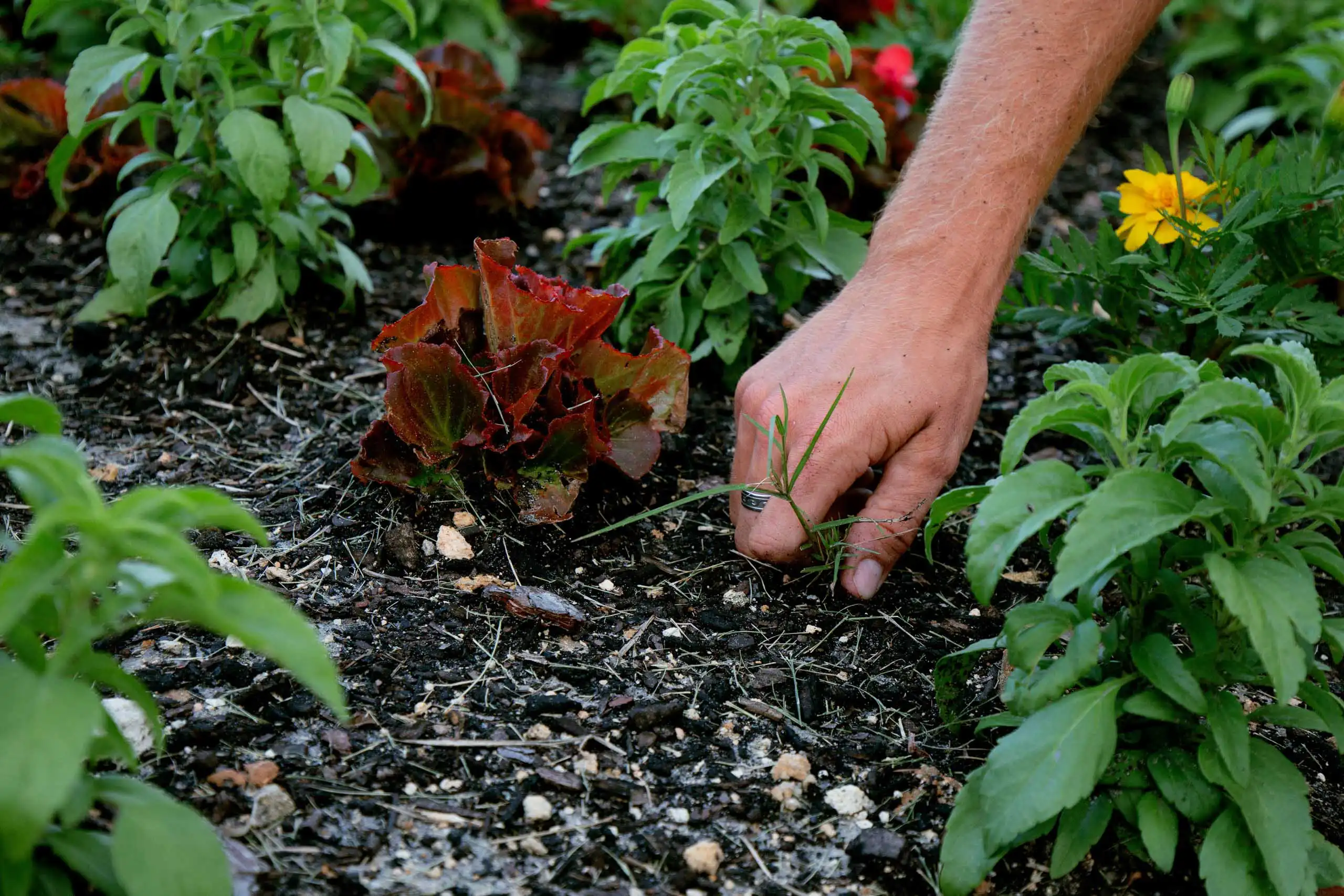
A dense, healthy St. Augustine lawn is its own best weed control. But where weeds do get a foothold in Gainesville lawns, the culprits tend to be grassy and broad leaf weeds. The best way to keep weeds away is by using a pre-emergent application before weeds reach their growing phase.
When to apply pre-emergent weed control products:
- Late January to mid-February: Target summer annuals.
- September to early October: Target winter annual weeds (chickweed, Poa annua, henbit) before temperatures trigger germination.
Miss either window and you’re managing rapidly growing weeds with post-emergent products – slower, more expensive, and harder on the lawn.
Herbicide selection matters with St. Augustine, which is more sensitive to certain broad-spectrum herbicides than Bermuda or Zoysia. This is one of the clearest arguments for professional lawn-spraying services: a licensed applicator avoids the product-selection errors that cause more turf damage than the weeds themselves.
SkyFrog Landscape’s lawn care services in Gainesville include weed control and lawn-spraying programs that are effective in North Florida’s growing zone.
Pest and Disease Pressure on St. Augustine Lawns in Alachua County
Gainesville’s warm winters mean pest populations don’t fully reset between seasons – chinch bugs, nematodes, and fungal pathogens that hard freezes would eliminate in colder climates carry over here at reduced but active levels.
Chinch Bugs
Chinch bugs are the most destructive pest of St. Augustine grass in North Florida. They pierce stolons and inject a toxin that causes turf to yellow, brown, and die in irregular patches – typically starting at lawn edges near hard surfaces.
Key diagnostic: chinch bug damage and drought stress look nearly identical. Drought-stressed grass rebounds within 24–48 hours of watering; chinch bug-damaged grass does not. If a patch isn’t recovering after irrigation, perform the floating can test before assuming it’s a moisture problem.
Sod Webworms and White Grubs
Sod webworms feed on St. Augustine blades at night, leaving irregular tan or brown patches with ragged blade edges. White grubs feed on roots below the soil surface – affected sections can be pulled back like a loose carpet.
Grey Leaf Spot
Grey leaf spot is most common in Gainesville lawns during the summer wet season, particularly in lawns over-fertilized with nitrogen. It appears as small oval lesions with tan or grey centers and yellow haloes on St. Augustine blades. Preventing it through appropriate summer fertilization and irrigation management is more effective than treating it after it appears.
Take-All Root Rot
Take-all root rot is one of the most frequently misdiagnosed problems in Florida’s St. Augustine lawns – the surface presentation of yellowing, thinning, and irregular dead patches resembles drought stress and chinch bug damage. The distinguishing feature is underground: short, blackened roots that detach easily from the stolons confirm the diagnosis. It is a soil-borne fungal disease (Gaeumannomyces graminis) that thrives in alkaline, wet conditions – exactly what Gainesville’s sandy soils and wet season provide.
Brown Patch
Brown patch (Rhizoctonia solani) is active in late fall and winter when temperatures drop into the 60–75°F range. It produces large, irregular circles of tan or brown grass with a dark margin visible in morning dew. Unlike take-all root rot, it typically doesn’t kill the turf permanently – roots and stolons survive, and the grass recovers as temperatures warm.
A note on cultivars and pests: pest stress can be reduced by using the right cultivars. At Skyfrog, we recommend Cobalt because it is far more pest-resistant than other St. Augustine varietals.
SkyFrog Landscape’s lawn care team goes the extra mile to identify pests we suspect are causing damage. We use a local lab to confirm our suspicions so that we can apply the right treatment and get to the root of the problem. If you’re seeing patches that aren’t recovering or a disease that keeps returning after DIY treatment, a professional assessment by our team is the fastest path to the right solution. Contact us for a free consultation.
When to Call a Lawn Care Professional in Gainesville
DIY lawn care in North Florida is manageable when the lawn is healthy and problems are caught early. There are specific situations where professional involvement pays for itself.
Recurring chinch bug infestations despite over-the-counter treatment are the most common scenario. Chinch bugs in Florida have developed resistance to some pyrethroid-based products, and a licensed applicator with professional-grade chemistry will break the cycle more reliably.
Persistent fungal disease that returns every season signals the underlying conditions – irrigation management, soil pH, fertilizer timing – haven’t been fixed. Treating symptoms without addressing causes means the disease keeps coming back.
Irrigation systems that aren’t properly calibrated cause more lawn care problems in Alachua County than most homeowners realize. A system with broken heads or coverage gaps creates both chronic drought stress zones and chronically overwatered zones in the same lawn – conditions that look like disease but aren’t.
SkyFrog Landscape’s team includes GI-BMP certified technicians, Florida Water Star certified professionals, and ISA Certified Arborists maintaining properties across Gainesville, Newberry, Alachua, High Springs, Tioga, Haile Plantation, and Jonesville. These certifications reflect training specific to Florida’s regulatory and environmental context – particularly relevant for St. Augustine care here, where soil type, seasonal timing, and local ordinances all shape what the right program looks like.
If your lawn isn’t performing the way it should, contact us to get started.
Summary
Homeowners with St. Augustine grass in Florida depend on it more than any other turfgrass, and this guide covers how to care for it across Gainesville’s specific soils, seasons, and local regulations. It includes a month-by-month lawn care calendar, watering and fertilization guidance, pest and disease identification, and weed control timing tailored to North Florida conditions. The guide ends with practical advice on when to call a professional and how SkyFrog Landscape’s certified local team can help – the locally specific reference every Gainesville lawn owner needs.